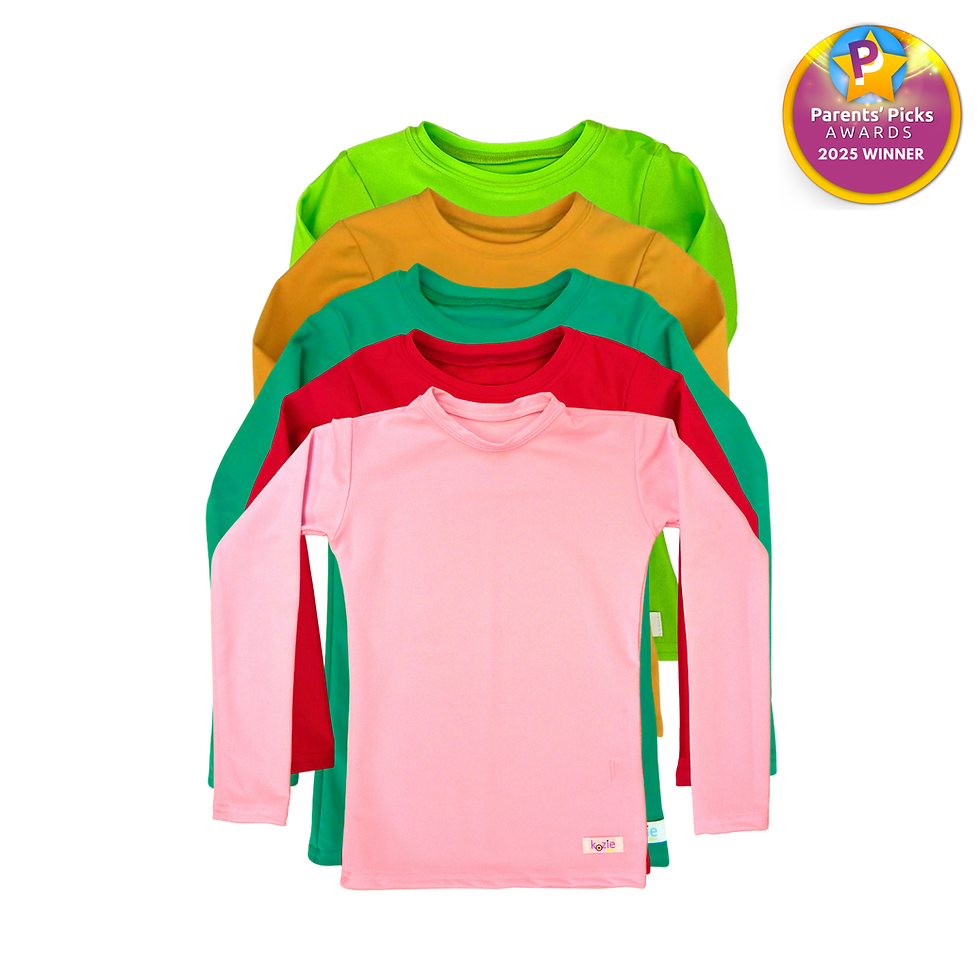
Girls Medical & G-Tube Accessible Short One-Piece Bodysuit
This delightful Kozie Bodysuit is our cute baby, toddler, and little girl medically adaptive one-piece bodysuit carefully designed to adapt with many medical treatments. Designed to provide safe, adorable, and comfortable dressing. This adorable Sensory soft one-piece bodysuit offers all front all front Hook and Loop closure and also at both shoulders and crotch. Safe, easy no over head dressing required. Our specialized one-piece body suit was designed with the assistance of Pediatric Nurses, Special Needs Parents, and Sensory Therapists.
This delightful Kozie Bodysuit is our cute baby, toddler, and little girl medically adaptive one-piece bodysuit carefully designed to adapt with many medical treatments. Designed to provide safe, adorable, and comfortable dressing. This adorable Sensory soft one-piece bodysuit offers all front all front Hook and Loop closure and also at both shoulders and crotch. Safe, easy no over head dressing required. Our specialized one-piece body suit was designed with the assistance of Pediatric Nurses, Special Needs Parents, and Sensory Therapists and includes easy access for the following medical treatments:
- Enternal Feeding / Gastrostomy Tube Feeding (G - Tube)
- Tracheostomies
- Ports and Catheters
Fabric / Material: 100% Cotton
Made in USA
Washing instructions: Machine wash in cold with like colors, Tumble dry low, only non-chlorine bleach
Enternal Feeding / Gastrostomy Tube Feeding (G -Tube)
To support children with certain medical conditions who cannot eat enough food by mouth, to enhance children’s nutrition, and to aid the metabolic demands of the stress of illness such as:
- Congenital heart defects as with ventricular or a trial septal defects or severe Malformations such as; tetralogy or Fallot, Hypoplastic left heart syndrome
- Congenital Anomalies of the upper Gastrointestinal Tract such; as Esophageal Atresia, Tracheoesophageal Fistula, Esophageal Duplications, Developmental Obstructive Defects of the stomach such as hypertrophic pyloric stenosis, Gastric atresia, congenital gastricobstruction, and Duodenal Obstruction/atresia, etc.
- Metabolic disorders such as; Adrenal Hypoplasia, Argininosuccinate lyase deficiency, Argininosuccinic Aciduria, etc.
- Neurological Impairment as with Massive Brain Damage. For example Infantile Cerebral Palsy, Anoxia Brain Injury, Brain Tumors, Cerebral Atrophy, Cerebellar Hypoplasia, Cerebral Cavernous Malformation and Head Trauma, etc.
- Genetic syndromes/Chromosomal syndromes causing feeding/eating disorders such as; Alagille Syndrome, Alexander’s Disease, Alfi’s Syndrome, Allan Herdon Dudley Syndrome, Angelman Syndrome, Antley-bixler Syndrome, Barth Syndrome, Bartter Syndrom, Beckwith-Wiedemann Syndrome, Bohring, Costello Syndrome, Silver-Russel Syndrome, Franceschetti syndrome, Noonan-syndrome, Corneila deLage Syndrome etc. Syndrome related malformations such as heart defect in Down syndrome, choanal atresia in CHARGE-syndrome and many more
- Psychosomatic/psychiatric eating disorders such as infantile anorexia
- Children who suffer from cancer may need ENS during chemotherapy to help prevent them from losing weight.
- Children suffering from renal insufficiency or renal diseases often lack appetite
- Prematurity
- Absent Swallow Reflex, Achalasia, Aspiration
- Craniofacial such as Cervical Lymphangioma, Cleft pallet, etc.
- Some children with Autism
To relieve an obstruction to breathing. This may be found in the following conditions and more:
- Tracheal/Bronchial Malasia
- Polyps and weak muscles in the trachea
- Inability to clear mucus for the lungs and airway
- Premature births
- Severe breathing conditions
- Tumors such as cystic hygroma
- Severe infection such as epiglottitis or croup
- Subglottic stenosis
- Tracheomalacia
- Vocal cord paralysis
- Laryngeal spasms or injury
- Congenital abnormalities of the airway
- Obstruction of airway
- Treacher Collins
- Pierre Robin Syndromes
- Severe neck or mouth injuries
- Airway burns
- Obstructive sleep apnea
- Bronchopulmonary Dysplasia
- Chronic pulmonary disease
- Chest wall injury
- Diaphragmdys function
- Paralyzingor weakening chest muscles and diaphragm
- Aspiration
- Fracture of cervical vertebrae
- Spinal cord injury
- Long-termun consciousness or coma
- Centralapnea
- Congenital Central Hypoventilation
- Facial surgery
- Facial burns
- Anaphylaxis
Porta a Catheter, or Port a Cath are often necessary for IV medicines, fluids, taking blood samples, and other IV treatment requirements. A few conditions may require a port or Cath such as:
- Cancer treatments, Chemotherapy
- Cystic Fibrosis
- Diabetes Mellitus
- Pancreatic Insufficiency
- Chronic Illnesses
- Etc.
Size Weight Micro Preemie 0 - 3 pounds Small Preemie 3 - 6 pounds Small Infant 5 - 8 pounds Newborn 8 - 12 pounds Age Group
Size
Height
Weight
Chest
Waist
Infant
3 Month
21 - 24 in
8 – 12 lb
15 – 16.5 in
16 - 17 in
Infant
6 Month
26 in
12 – 16 lb
17.5 in
17.5 in
Infant
9 Month
28 in
16 – 18 lb
18.5 in
18.5 in
Infant
12 Month
30 in
18 – 21 lb
19 in
19 in
Infant
18 Month
32 in
21 – 26 lb
19.5 in
20 in
Age Group
Size
Height
Weight
Chest
Waist
Toddler
2T
33 - 36 in
27-32 lb
20 in
20.5 in
Toddler
3T
36 - 39 in
33 - 36 lb
21 in
21 in
Toddler
4T
39 - 42 in
36 - 40 lb
22 in
21.5 in
Toddler
5T
42 - 45 in
40 - 44 lb
23 in
22.5 in
Age Group
Size
Height
Weight
Chest
Waist
Kids
6
45 - 48 in
44 - 52 lb
24 in
23 in
Kids
7
48 - 51 in
52 - 62 lb
25.5 in
23.5 in